
How to Choose the Ideal Toy for Each Age

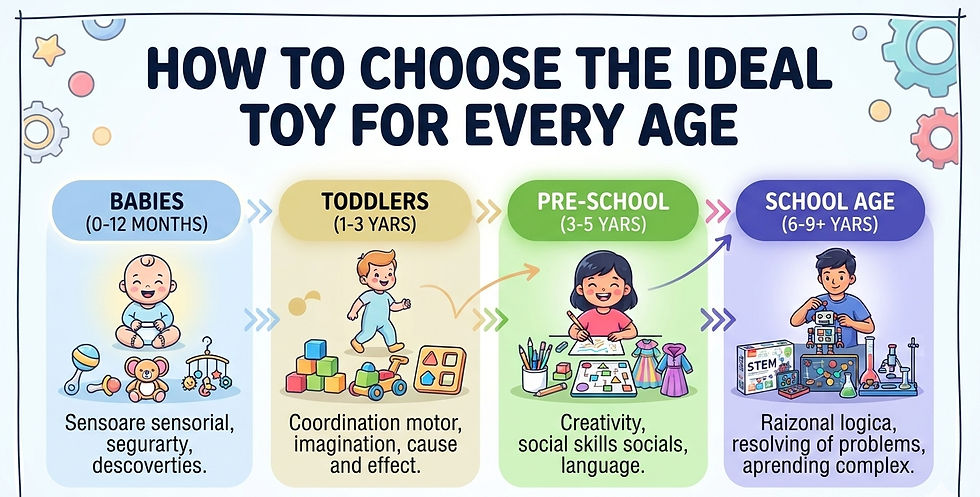
Choosing the right toy for each age group can be a challenge, but it is essential to ensure the child has fun while learning. Here are some tips to help you make the ideal choice:
0 to 12 Months
Textured Toys: Opt for soft toys with various textures that stimulate the sense of touch.
Musical Toys: Gentle sounds and melodies can aid auditory development.
Teething Toys: Safe toys for chewing are great for relieving teething discomfort.
1 to 2 Years
Stacking Toys: Stackable blocks or cups help with motor development and coordination.
Shape-Sorting Toys: Toys that require fitting shapes together are excellent for logical reasoning.
Interactive Toys: Choose toys that speak or make sounds to encourage interaction.
3 to 4 Years
Pretend Play Toys: Costumes and play kitchens encourage imagination and symbolic play.
Simple Puzzles: These help develop problem-solving skills.
Construction Toys: Building blocks are great for creativity and coordination.
5 to 7 Years
Board Games: These encourage teamwork and socialization.
Science Toys: Simple experiment kits spark curiosity and an interest in science.
Art Activities: Painting and crafting materials stimulate creativity.
8 Years and Older
Strategy Games: Games requiring planning and strategy help develop critical thinking skills.
Sports Toys: These encourage physical activity and teamwork. Tech Toys: Robots and programming kits are excellent for sparking an interest in technology and innovation.
With these guidelines, you can choose toys that not only provide entertainment but also contribute to a child's healthy development at every stage of childhood.
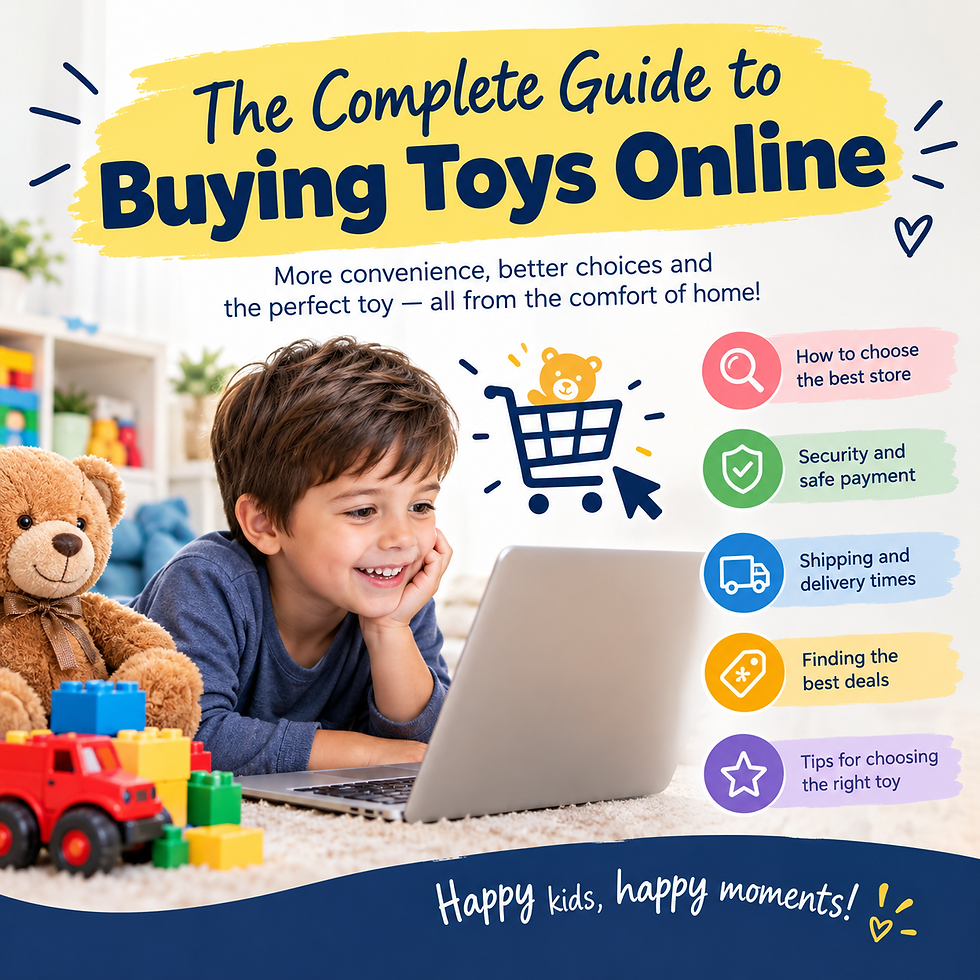
Complete Guide to Buying Toys Online
Purchasing toys online can be a convenient and enjoyable experience, but it also requires careful consideration to ensure you make the best choices for your child. This guide will walk you through the essential steps to help you navigate the online toy shopping landscape effectively.
1. Research and Planning
Before you start shopping, it's important to have a plan. Here are some aspects to consider:
Know Your Child's Interests: Understand what types of toys your child enjoys. This could be based on their favorite characters, activities, or hobbies.
Age Appropriateness: Check the recommended age range for toys to ensure they are suitable for your child’s developmental stage.
Safety Standards: Look for toys that meet safety regulations. Check for certifications like ASTM or CE marks.
2. Finding Reputable Online Retailers
Choosing the right retailer is crucial. Consider the following:
Reviews and Ratings: Read customer reviews and ratings to gauge the reliability of the seller.
Return Policy: Ensure the retailer has a clear and fair return policy in case the toy does not meet your expectations.
Shipping Options: Look for retailers that offer reasonable shipping rates and delivery times.
3. Comparing Prices
Online shopping allows you to easily compare prices across different retailers. Here are some tips:
Use Price Comparison Websites: These can help you find the best deals available online.
Check for Discounts: Look for promotional codes or seasonal sales that can save you money.
Factor in Shipping Costs: Sometimes a lower-priced toy can end up being more expensive due to high shipping fees.
4. Making the Purchase
Once you’ve found the right toy at the right price, it’s time to make your purchase. Keep these points in mind:
Secure Payment Methods: Use trusted payment methods to protect your financial information.
Double-Check Your Order: Review your cart to ensure you have selected the correct item and quantity.
Save Your Receipt: Keep a copy of your purchase confirmation for reference.
5. After the Purchase
After you’ve made your purchase, consider the following:
Track Your Order: Use tracking information to monitor your shipment’s progress.
Inspect the Toy Upon Arrival: Check for any damages or defects before giving it to your child.
Feedback: Leave a review based on your shopping experience to help other buyers.
Conclusion
Buying toys online can be a fun and efficient way to shop, provided you take the necessary precautions. By following this guide, you can ensure that you choose the right toys for your child safely and conveniently.
7 Factors to Consider Before Buying a Toy
When it comes to choosing the perfect toy for a child, there are several important factors to consider. Here are seven aspects that can help guide your decision:
1. Recommended Age
Check the recommended age range on the toy's packaging. This ensures the toy is safe and appropriate for the child's developmental stage.
2. Safety
Make sure the toy meets all safety standards. Look for certifications and avoid toys with small parts that could pose a choking hazard.
3. Material
Consider the materials used to make the toy. Opt for non-toxic choices and, if possible, select toys made from sustainable or organic materials.
4. Interactivity
Interactive toys can stimulate creativity and learning. Assess whether the toy offers activities that encourage the child's imagination.
5. Durability
Choose toys that are sturdy and durable. This is especially important if the child is active and tends to play vigorously.
6. Educational Value
Consider whether the toy offers educational value. Toys that teach motor skills, problem-solving, or basic concepts are excellent choices.
7. Child's Preferences
Last but not least, take the child's interests and preferences into account. Choosing a toy that reflects their tastes can increase engagement and satisfaction.
Toys That Entertain and Stimulate Child Development
Toys play a fundamental role in child development, offering not only fun but also opportunities for learning and growth. Below, we highlight some types of toys that are especially effective at stimulating different areas of child development.
1. Construction Toys
Construction toys, such as blocks and building sets, encourage creativity and critical thinking. Children learn about shapes, sizes, and colors while developing fine motor skills and coordination.
2. Pretend-Play Toys
Toys that mimic everyday life, such as play kitchens or tool sets, help children develop social and emotional skills. They learn to communicate, share, and work as a team during imaginative play.
3. Educational Toys
Educational toys, including puzzles and board games, are excellent for stimulating logical reasoning and problem-solving. These toys also foster patience and persistence—skills essential for learning.
4. Musical Toys
Musical instruments and sound-producing toys aid in auditory development and motor coordination. Music also has a positive impact on children's emotions and ability to concentrate.
5. Outdoor Toys
Toys such as bicycles, balls, and playground equipment encourage physical activity. In addition to promoting health, these toys help develop gross motor skills and foster socialization among children.
Conclusion
Choosing toys that offer diverse learning experiences can have a lasting impact on child development. By selecting toys that not only entertain but also stimulate essential skills, parents can significantly contribute to their children's healthy and balanced growth.
Comments